
Brown, rusty or tea-coloured hot water is unsettling, and the internet's answer is usually "your water heater is dying." Sometimes that's true. Often it isn't, and the difference takes about sixty seconds to establish.
The test that splits the problem in half
Go to a tap you don't use much — a basement sink, an outside spigot, a guest bathroom. Run cold only for a minute and look at it in a white cup or against a white sink.
| What you see | What it means |
|---|---|
| Cold is clear, hot is brown | The water heater. Anode rod or sediment. |
| Both are brown | Supply piping or municipal. Not the heater. |
| Both brown, cleared in a few hours | Almost certainly hydrant flushing or a main break. |
| Only brown after sitting unused | Corrosion in the pipes, worst in older galvanized lines. |
If it's the water heater
The anode rod is spent
This is the most common answer, and it's worth understanding because it's also the cheapest thing to stay ahead of.
Every tank water heater has a sacrificial anode rod — a length of magnesium or aluminium suspended inside the tank. Its entire job is to corrode instead of your tank. Electrochemically, it's the piece the water attacks first.
It works exactly as designed until it's used up. Then the water moves on to its next target: the steel walls of your tank. That's when rust starts showing up in your hot water.
Timing is everything on this one. Replacing an anode rod is inexpensive and can add years to a tank. But it only helps if it's done before the tank itself starts corroding. Once you're seeing rust in the water, the tank has usually already begun breaking down, and a new rod won't reverse that.
Which is why anode rods are worth checking during an annual service rather than after the water turns brown.
Sediment got stirred up
Mineral sediment settles at the bottom of the tank over years. Disturb it — a flush, a main break, a big draw — and it clouds the hot water temporarily.
The tell is that it clears up after running the hot water for a while. Rust from a corroding tank doesn't clear; it comes back every time.
The tank is failing
Persistent rust plus an older unit is the version nobody wants. If the tank's steel has corroded through the glass lining, there's no repair — you can't fix a pressurized vessel that's rusting from the inside.
Rusty water alongside moisture at the base is the clearest version of this signal. We covered how to read that in what water under the tank actually means.
If both hot and cold are brown
Your heater is off the hook. Now it's one of:
- Municipal work. Hydrant flushing or a nearby main break stirs iron sediment through the mains. It's temporary and usually clears within hours. Running a cold outside spigot for several minutes helps flush your service line.
- Galvanized supply pipe. Common in Portland-area homes built before roughly the 1960s. Galvanized steel corrodes from the inside over decades, and the classic tell is discolouration that's worst first thing in the morning after water has sat still overnight.
- A section of failing pipe somewhere in the house, which a pressure and flow check can help narrow down.
If it's galvanized, brown water is the symptom people notice — but reduced flow and pressure are usually happening at the same time. That's a repipe conversation rather than a water heater one.
"Why does my water heater look corroded at the connections?"
We get asked this a lot, and it's a separate question from brown water — though the underlying chemistry is related.
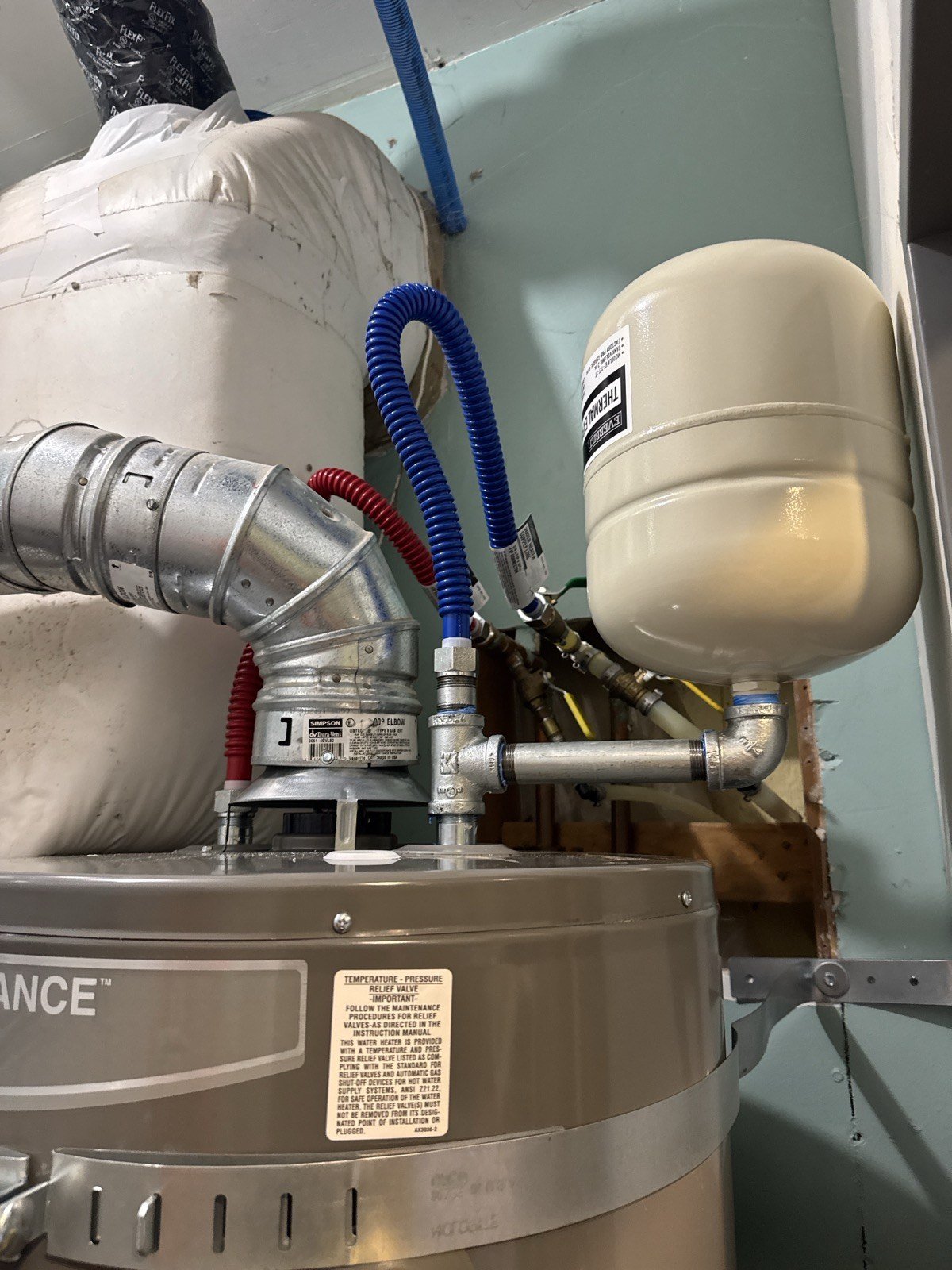
That crusty buildup at the top of the tank, usually white, chalky green or rust-coloured around where the pipes screw in, is typically galvanic corrosion. It happens wherever two dissimilar metals meet in the presence of water — most often copper supply pipe joined to the steel nipples on the tank.
The metals form a small electrochemical cell and one of them gives up material. Dielectric unions or dielectric nipples exist specifically to separate those metals and interrupt that reaction. When they're missing, undersized, or worn out, you get the crust.
How worried should you be?
- Light surface buildup on an older unit is extremely common and not an emergency.
- Heavy, flaking corrosion means the connection itself is deteriorating. These fail eventually, and they fail as leaks at the top of the tank — which then runs down the outside and looks exactly like a tank failure.
- Any moisture or staining at those fittings means it's already weeping and should be dealt with.
The good news: it's a fitting problem, not a tank problem. Replacing corroded nipples and installing proper dielectric unions is straightforward, and it's far cheaper than the water damage from a connection that lets go while you're at work.
A note on Portland water
Homes on the Bull Run supply have notably soft, low-mineral water. That's mostly good news — less scale, less sediment, tanks that often reach the longer end of the eight-to-twelve year range.
The tradeoff is that soft, low-mineral water can be more aggressive toward metal plumbing than hard water is, which is part of why the water bureau treats the supply for corrosion control. In practice that makes the anode rod and the connections worth actually looking at rather than assuming they'll last forever.
Parts of Washington County on harder groundwater blends have the opposite profile: more scale and sediment, less aggressive on metal. Different failure modes, same annual service.
Is it safe?
Rust particles in water are generally not considered a health hazard. They taste metallic, they'll stain laundry and porcelain, and they're unpleasant — but the concern is what they indicate, not what they are.
Separately, and regardless of colour: hot water out of a storage tank isn't intended for drinking or cooking. Use the cold tap for that.
Common questions
Will flushing the tank fix it?
If it's loose sediment, often yes. If the tank walls are corroding because the anode is spent, no — the source is the tank breaking down, not debris sitting in it.
How often should the anode rod be checked?
Worth inspecting during annual service, and more attentively past the five-year mark. Replacing one before the tank starts corroding is one of the best-value things you can do for a water heater.
Only brown first thing in the morning?
Points to pipes rather than the heater — water sitting still in corroding galvanized line overnight. Especially likely in homes built before the 1960s.
Is the crust on my connections a leak?
Not by itself. Light buildup is common. Heavy flaking corrosion, or any dampness at the fittings, means it's deteriorating and should be looked at.
Not sure which one you've got?
Run the cold tap test, then send us a photo of the top of your water heater. Between those two things we can usually tell you whether it's the anode, the fittings, or your pipes before we come out.
Facing a repipe or replacement? Why homeowners pick us · financing with a soft credit check.