
We publish these numbers because almost nobody in this trade will. You shouldn't have to book three appointments just to find out whether the thing you're considering costs two thousand dollars or six.
So here's the honest comparison, including the part most quotes gloss over.
The numbers side by side
| 40–50 gallon tank | Tankless | |
|---|---|---|
| Installed price | $1,695 and up | $4,000 – $6,000 |
| Old unit haul-out | Usually included | Included |
| Typical lifespan | 8–12 years | ~20 years |
| Hot water supply | Limited by tank size | Doesn't run out |
| Floor space used | A closet-sized footprint | Wall-mounted, frees the floor |
| Biggest cost variable | Code items (expansion tank, strapping, pan) | Venting |
| Ongoing maintenance | Annual flush recommended | Annual flush / descale, more important |
Why tankless swings by two thousand dollars
This is the part worth understanding before you get quotes, because it explains why two plumbers can give you very different numbers for what sounds like the same job.
A tankless unit cannot reuse your old vent. A tank heater vents through standard B-vent, often up an existing flue or chimney that's been there since the house was built. A gas tankless burns far more fuel while it's running — it has to heat water instantly rather than slowly — and it requires its own sealed, category-rated venting. That old flue doesn't transfer.
So the question becomes: where does the new unit go, and how far does the vent have to travel to get outside? A tankless mounted on an exterior garage wall might need three feet of vent. The same unit in an interior utility closet in the middle of the house might need a long run through framing, or a path up through the roof. Same appliance, very different labor.
Two other things commonly ride along:
- Gas line sizing. A tank heater sips gas by comparison. A tankless can demand several times the burner input while running, and if the existing line can't feed it, that line gets upsized back toward the meter.
- Condensate drainage. High-efficiency condensing units produce acidic condensate that needs somewhere to go, and often needs neutralizing before it does.
None of that is upselling. It's what makes the unit run correctly and pass inspection. But it's also why an honest tankless quote can't be given over the phone without someone looking at where the unit is going.
What drives the tank price
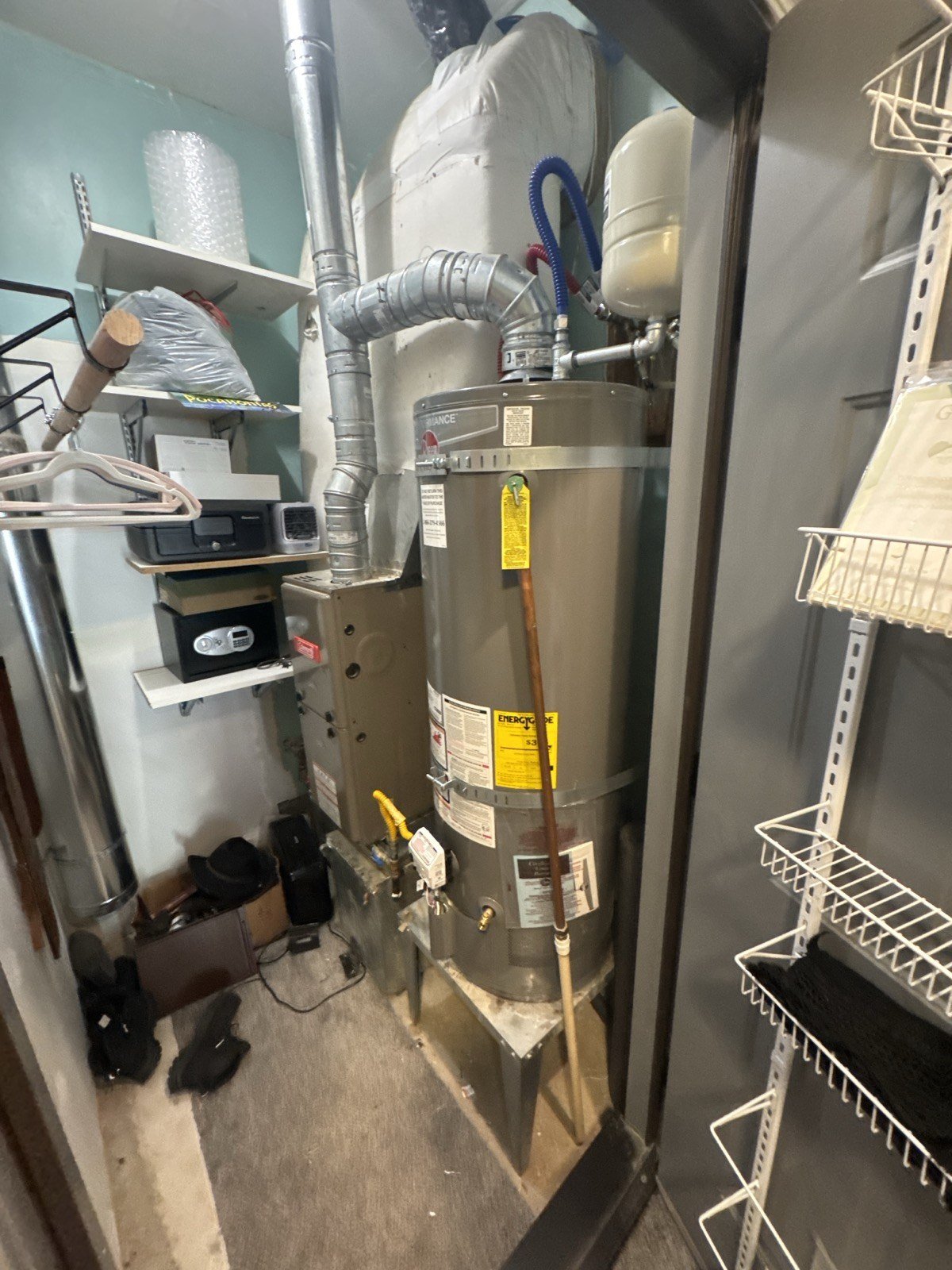
A tank swap is a more predictable job, which is why it starts at a firm number. What moves it is code work the replacement triggers:
- Expansion tank on a closed system, to absorb thermal expansion instead of letting the relief valve vent. (If you're not sure what that means, we wrote about it in why water pools under a water heater.)
- Seismic strapping — required in Oregon, and frequently missing on older installs.
- Drain pan where the location calls for one.
- Permit and inspection. Replacement is permitted work here, for both types.
A quote that skips the permit isn't a better deal. It's an incomplete job, and it tends to reappear during a home sale when the buyer's inspector asks what happened to the permit history.
Does tankless pay for itself?
Straight answer: not on gas savings alone. A tankless is more efficient because it isn't reheating a standing tank of water all day, and your gas bill will reflect that. But the gap between $1,695 and $4,000–$6,000 is large, and the monthly savings on a typical household don't close it before the unit is due for replacement.
Anyone who tells you the energy savings pay for a tankless is selling. The real reasons to choose one are different, and they're legitimate:
- Hot water that doesn't run out. If your household regularly drains a 50-gallon tank — teenagers, back-to-back showers, a big soaking tub — this is the actual argument for tankless, and it's a good one.
- Lifespan. Roughly twenty years against eight to twelve. Over a long enough horizon you buy one tankless instead of two tanks.
- Space. Wall-mounted units give you back a closet or a chunk of garage floor. In a small house that's worth real money.
- You're already opening walls. If you're remodeling, the venting and gas work that makes tankless expensive is dramatically cheaper when the walls are already open.
So which should you get?
A tank is usually the right call if…
- Your current heater just failed and you need hot water back today.
- Budget is the deciding factor.
- Your household doesn't routinely run out of hot water.
- You may not be in the house another decade.
Tankless earns its price if…
- You run out of hot water regularly and it genuinely bothers you.
- You're staying put fifteen or twenty years.
- You want the floor space back.
- You're remodeling anyway, or the unit can go on an exterior wall with a short vent run.
There's no wrong answer here. Most of the tank heaters we install go into homes where a tank is simply the sensible choice, and we'll tell you that rather than talk you into something bigger.
One Portland-specific note on maintenance
If you're on Portland's Bull Run supply, you've got notably soft, low-mineral water, which is kind to both types — less sediment in a tank, less scale in a tankless heat exchanger. Parts of Washington County running on harder groundwater blends are a different story, and there the annual flush matters more.
That's especially true for tankless. A tank with scale buildup gets less efficient. A tankless heat exchanger with scale buildup starts throwing error codes and eventually fails. If you go tankless, budget for an annual descale the way you'd budget for a furnace service — it's the difference between twenty years and a warranty argument.
Common questions
How much does a tankless water heater cost to install in Portland?
$4,000 to $6,000. Venting is the biggest variable — where the unit goes and how far the new vent run has to travel.
How much for a 40 or 50 gallon tank installed?
$1,695 and up, usually including haul-away of the old unit. Code items like an expansion tank, strapping and the permit move the final number.
Why can't the tankless use my old vent?
Different combustion, different venting requirements. A gas tankless needs its own sealed, category-rated vent and can't share the old B-vent or flue.
Is tankless worth it in Oregon?
Not for energy savings alone. Worth it for endless hot water, roughly twenty-year lifespan, and reclaimed floor space — especially if you're staying in the home long-term.
Do I need a permit?
Yes, for both. Replacement is permitted work in Oregon and current code brings in strapping, venting, expansion tank and pan requirements.
Want a real number for your house?
Send a photo of your current heater and where it sits. For a tank we can usually quote from that. For tankless we'll tell you honestly whether your venting situation puts you at the low or high end of that range.
Not the right month for a big expense? We offer financing with a soft credit check. And if you're weighing who to hire, here's why homeowners pick us.